The four anonymity layers
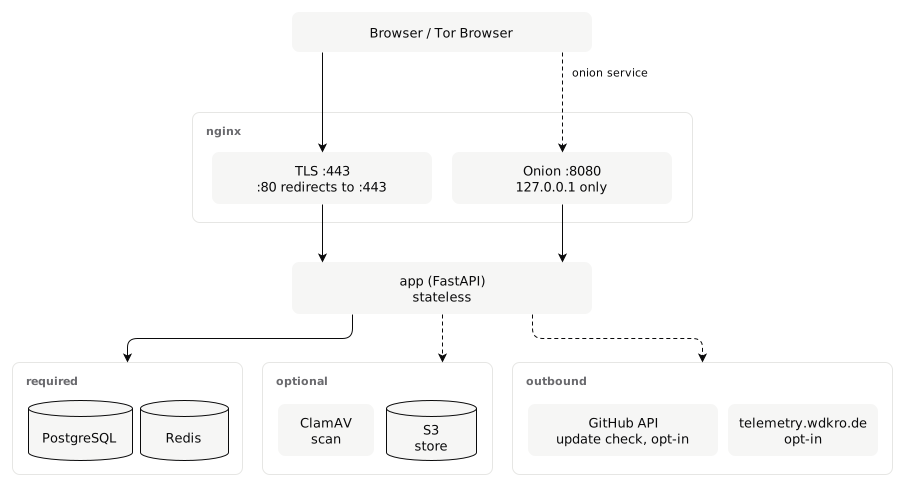
Defence in depth for anonymity: four independent layers keep IP addresses out of persistent storage.
nginx — Strip the client-IP headers
X-Forwarded-For, X-Real-IP, Forwarded,
X-Client-IP, X-Cluster-Client-IP, True-Client-IP
and CF-Connecting-IP are cleared before a request reaches the app, even
when a CDN added them. access_log off: request URIs never reach the disk.
A reverse proxy of your own in front must not log them either.
Application middleware — Drop remote address
The first middleware removes those headers again and clears the peer address, before
any route handler runs. No handler can read the real address, even if it tried. If
such a header arrives anyway, the admin dashboard warns that a proxy in front knows the
addresses.
Database schema — No IP column
No table has an IP address column: not
reports,
report_messages, audit_log or admin_users. The
ORM cannot persist an address; that is structure, not policy.
Redis sessions — No identifying metadata
A whistleblower's status session is a random 256-bit token. Its Redis value is only
the report's id, and it expires after 2 hours. No IP, no User-Agent, no browser
fingerprint.